
The Digital Edge: September 2026 Edition
Welcome to "The Digital Edge" from Web Design Imagineers!
Welcome back. We hope you're having a lovely summer. This month, we're diving into some new business shaping subjects: AI adoption, 13 Week Cash Checks & Increase in Key Occupations. Each one comes with a specific task you can try out.
Next month I'll be sharing some up-to-date insights into the world of web and related digital subjects.
We are all busy people, so I'll keep things clear, interesting, and useful.
In this edition, we're looking at:
- AI You can trust
- Profit is not cash
- The skills sprint
- Your FREE Download
- Book of the month
- Article: Understanding AI
Three practical shifts worth your attention
A short monthly briefing for people who want to make better decisions at work without adding more noise to the week.
This month’s promise: take one useful idea from each story, test it on a small scale, and keep what improves the way you work.
1. AI you can trust
The useful shift is moving from trying tools to improving a task
Small businesses are not adopting AI at one uniform pace. The strongest recent signal is speed: in the JPMorganChase Institute’s transaction-based sample, the 2019 cohort took 77 months to reach 10% adoption, while the 2025 cohort reached the same point in about six months.[1] The same research found that businesses paying for only one AI service fell from 89% in 2019 to 72% in 2025, suggesting that some firms are moving from isolated experiments towards broader operational use.[1]
That does not mean every organisation needs a bigger tool stack. It means the sensible question is: which repeatable task is worth improving, and what guardrails make the change safe? CSET’s guidance for SMEs recommends a readiness check, data protection, model testing, an acceptable-use policy and AI literacy before trying to scale.[2]
Try this this week: the 30-minute AI test
Choose one low-risk, repeatable task such as turning meeting notes into a short action list, comparing two internal documents, or creating a first draft of routine wording. Before you begin, write down the current time taken and what “good” looks like. Use no confidential or personal information. Have a person check the result. At the end, record time saved, corrections needed and whether the output was genuinely useful.
Keep: Tasks where a person can verify the output quickly.
Change: Prompts, templates or review steps that create avoidable errors.
Stop: Any use involving sensitive information without clear permission and protection.
Favourable outcome: You finish with evidence about one real workflow, not another subscription and a vague feeling that AI ought to be helping.
2. Profit is not cash
A clearer cash view can make ordinary decisions feel less risky
The British Business Bank reports that around half of smaller businesses seek external finance, and that flexible forms of finance were used more in 2025 to support cash flows.[3] The useful lesson is not “borrow more”. It is to make cash timing visible early enough to give yourself choices.
A profitable month can still feel tight if invoices are paid later, stock is bought earlier, tax falls due, or a large cost arrives before the related income. A simple 13-week view is often more useful than a distant annual forecast because it turns uncertainty into a short list of conversations and decisions.
Try this this week: build a 13-week cash check
Start with the bank balance you actually have.
Add only money you have a reasonable basis to expect, then list committed payments and likely costs by week. Mark each item certain, probable or uncertain. Review it for ten minutes every Friday and choose one action: chase an overdue invoice, confirm a payment date, delay a non-essential purchase, or speak to a finance provider before the pressure is urgent.
Rule of thumb: The forecast is not a prediction contest. It is a prompt for earlier, calmer decisions.
Favourable outcome: Fewer surprises, better conversations with suppliers and funders, and more room to choose rather than react.
3. The skills sprint
Short, role-based practice beats a one-off training day
Skills England’s 2026 report says demand for key occupations in priority sectors is expected to increase by nearly a quarter over the next decade, while the education pipeline alone will not be enough to meet employer needs.[4] It also highlights communication, problem solving, digital literacy and adaptability as transferable skills employers value as technology changes work.[4]
For a small team, the practical response is not necessarily a large training programme. It can be a repeatable four-week cycle: pick one skill, practise it on real work, share what helped, and adjust.
Try this this month: one skill, four Friday check-ins
Pick one live friction point, such as handovers, customer queries, spreadsheet errors or prioritisation. In week one, agree what better looks like. In week two, each person tries one small change. In week three, review one real example together. In week four, keep the best step and write it into the team’s normal way of working. Rotate the facilitator so the learning does not belong to one person.
Week 1: What does “better” look like in this role?
Week 2: What small behaviour can we practise immediately?
Week 3: What happened in a real piece of work?
Week 4: What should become part of the normal routine?
Favourable outcome: Capability grows inside the work, and the team leaves with a better process rather than just a completed course.
The edge to keep
The three stories point to the same operating habit: make the change small enough to test, visible enough to measure and safe enough to repeat. That is how useful progress becomes part of the day-to-day.
A simple Friday review
Ask three questions: What improved? What did we learn? What will we repeat next week? Keep the answers in one shared note so small wins become organisational memory.
References
[1] JPMorganChase Institute — Understanding the use of AI among small businesses: https://www.jpmorganchase.com/institute/all-topics/business-growth-and-entrepreneurship/understanding-ai-use-by-small-businesses [2] Center for Security and Emerging Technology — What Do AI Standards Mean for Small and Medium Enterprises?: https://cset.georgetown.edu/article/what-do-ai-standards-mean-for-small-and-medium-enterprises/ [3] British Business Bank — Small Business Finance Markets Report 2026: https://www.british-business-bank.co.uk/about/research-and-publications/small-business-finance-markets-report-2026 [4] GOV.UK — Skills England annual skills report 2026: https://www.gov.uk/government/publications/skills-england-annual-skills-report-and-sectoral-skills-needs-assessments-2026/skills-england-annual-skills-report-2026Research checked 4 September 2026. This newsletter is general information, not financial, legal or professional advice.
This month's books
I have been adding more books to my bookshop including a couple of great free ones. Several to do with cashing in with AI for Teaching, Freelance writing & Freelance designing. Also one on making money with Youtube and also using AI confidently.
Here are a couple of highlights for you, hot off the press:
Free Download
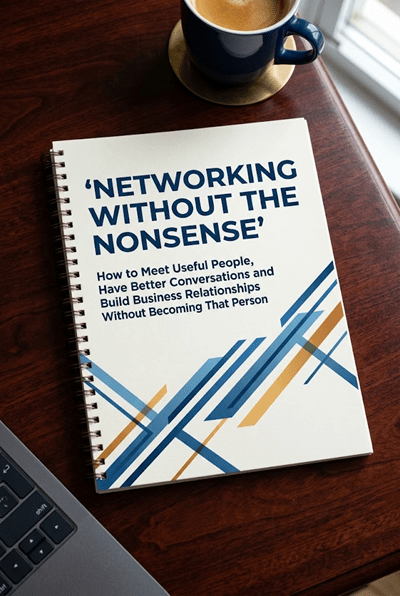
Networking Without The Nonsense
Networking Without the Nonsense is a straightforward guide to meeting people, starting better conversations and turning casual contacts into useful business relationships.
Download Your FREE Copy Now!
Book Of The Month
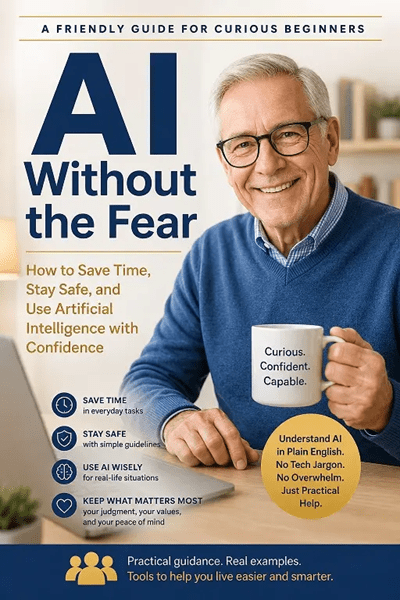 AI Without The Fear
This book emphasises understanding AI as a tool that predicts based on patterns, not a conscious entity, highlighting risks like fake news, images, scams, and AI errors.
It advocates for skepticism, verification, and informed use, stressing AI’s benefits in saving time and enhancing life while cautioning against overtrust and misuse.
Must Read
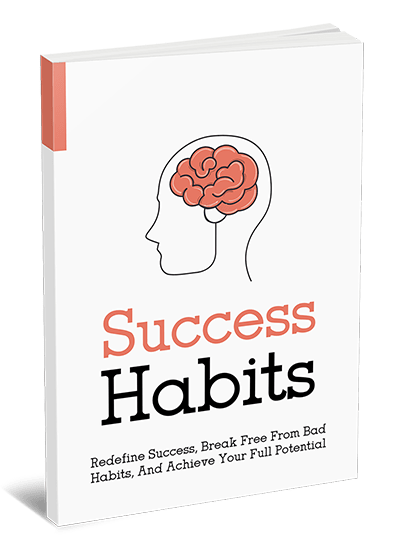
Success Habits
"Discover The Steps On How You Can Redefine Success, Break Free From Bad Habits, And Achieve Your Full Potential"
You'll Learn The Secrets To Finally Take Control Of Your Life And Achieve The Success You Deserve
This guide is exactly what you need if you have struggled to create new habits and if you follow the principles here you will have success, no matter what your specific goals actually are.
Article
What Is AI? - Understanding Artificial Intelligence in Plain English
An article created for the uninitiated and curious people.
Easy Read Artcle - Enjoy.
About Web Design Imagineers
Websites:
I run a business designing & developing websites for SMEs. I am impressing upon people the importance of "Mobile First" Websites. Google has a preference for mobile websites, that is, websites that are primarily aimed at the mobile market.
Why? Because people (your customers & clients) are more likely to access the internet via their mobile device. It's true! If you are not mobile-friendly or just don't have a website (and would like one...) drop me an email and I will explain all.
Software Products:
I am developing new software to help you in your business or workplace. Watch out for some announcements.
Mobile Apps:
I also develop "Progressive Web Apps" These are mobile apps designed to run via the internet and simply avoid the app stores and cost a tenth of even the lowest cost native app!
Books:
I also provide a wide range of business related ebooks and video training programmes.
Thank You:
I will be back soon with the next edition of The Digital Edge. Keep a look out in your inbox.
I may also send you the occasional relevant email on business-related matters. (I never spam)
Until we meet again… have a great day!
GRAHAM McLUSKY
Managing Director
Web Design Imagineers
0800 026 0766
www.webdesign-imagineers.co.uk
graham@webdesign-imagineers.co.uk

Graham J. McLusky
(With AI Makeover!)